
Bubble Tiles are inspiring some very interesting thinking with extensions in all directions. As we continue to use them with all ages in our Math Rooms and our partners use them as part of outreach programs, others are looking seriously at the mathematics, developing and documenting ideas for lesson plans, creating apps for the iphone, and making fine art games for the table top. Here are some of the works we gathered for an informal meet up over zoom. If you have interests or ideas please let us know at [email protected] and we’ll invite you next time!
Outreach
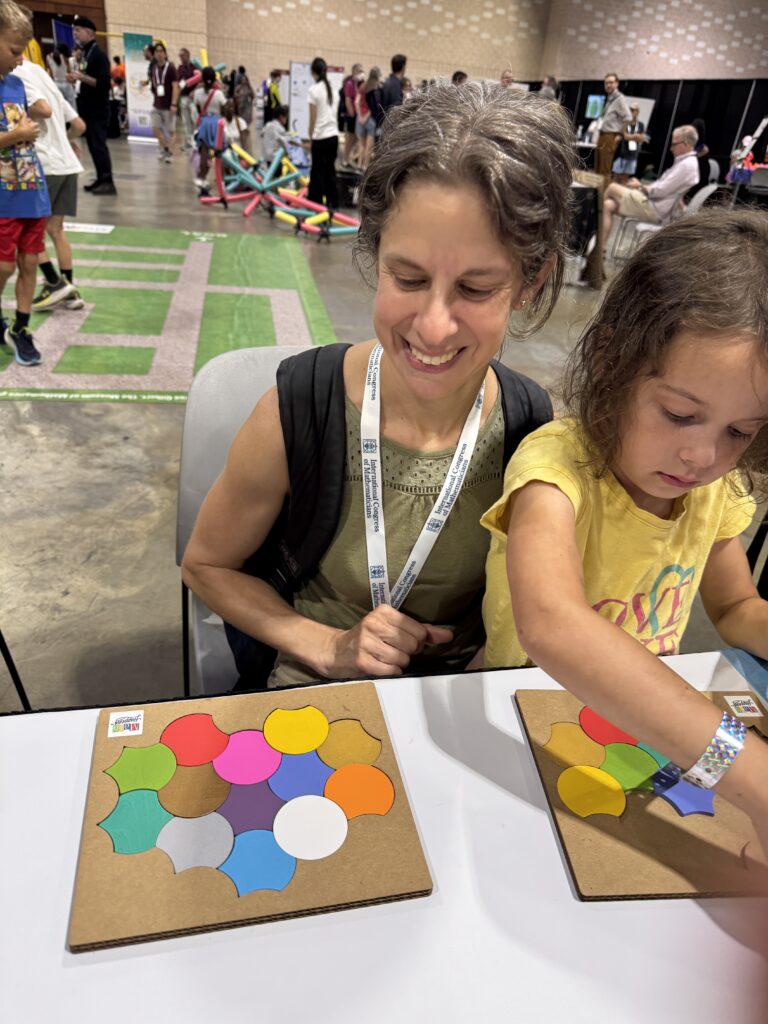
The challenge is as popular with the International Congress of Mathematicians as it is with the patrons at the Houston Public Library! Bubble tiles are proving to be a pillar activity for our math outreach programs whether in facilitated spaces or as part of an unfacilitated activity station.


Academic Papers
High school student Alexander McClure wrote this analysis in 2024 called The Puzzling “One of Each Tile” Frame that predicts the number of solutions to our ubiquitous “One of Each” Challenge.
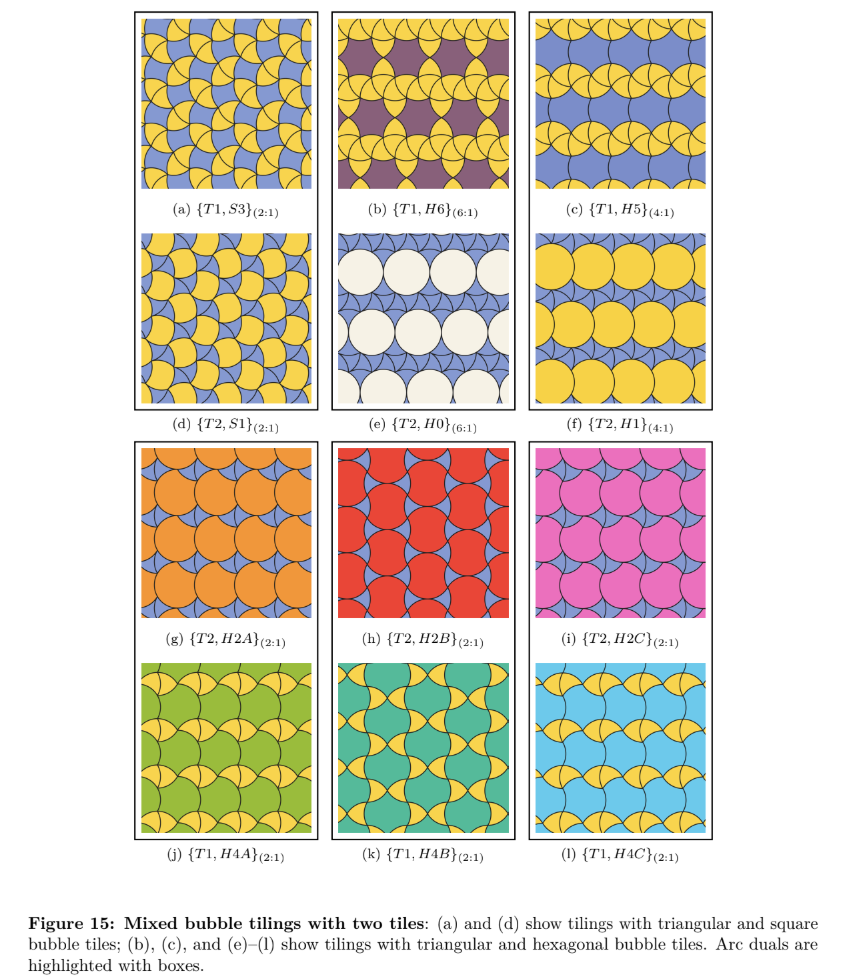
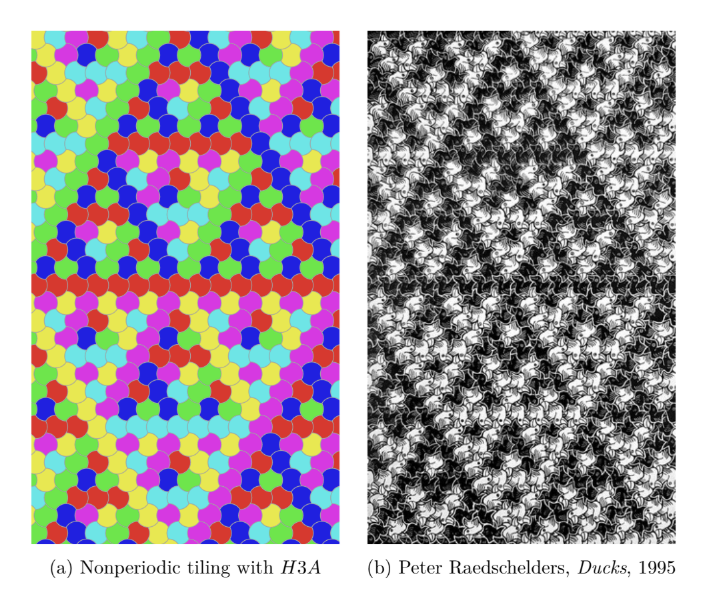
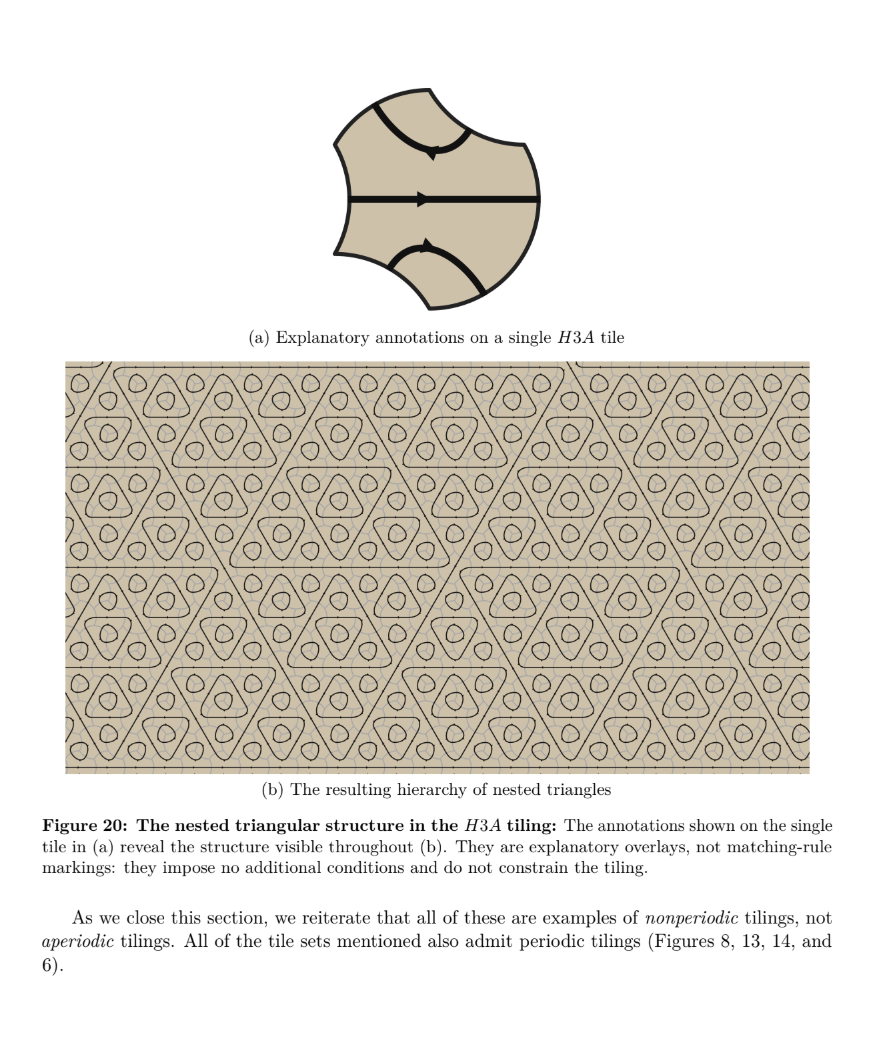
John Chase, Will Field and Alexander McClure have developed this paper called Puzzle Pieces and Bubble Tiles and just this week began to circulate the draft for comments and questions among colleagues. Inside you will find tons of interesting images and ideas! John’s APP available here on Github is a great way to experiment with Bubble Tiles.
A few intriguing images from the paper.
MathHappens college intern Asa Grumdah wrote about Heech numbers and bubble tiles in a blog post called The Surounding Game
Puzzles and Games
Tim Reinhart is in the final stages of testing an app for iphones. If you’d like a preview you can find it in Test Flight. Its called Bubble Tiles and it has Daily puzzles, a really great “About” section and some wonderful color and graphics options. Tim Reinhardt is a math PhD student from Munich 🙂
Kate Jones of Kadon Enterprises has done some really interesting pattern finding and making with the “other” Quadrilateral and “pentagonal” Bubble Tiles which, with the triangles make a set we call Bubble 31. We are looking forward to a formal debut soon!
Educator Resources
A wonderful announcement from MoMath! Lauren Sawyer, who works for Math Circles of Chicago is the Rosenthal Prize 2025 winner with a lesson on Bubble Tiles. She includes some different ways students can generate the tiles with paper folding and analysis as well.


Origins
Look in our Bubble Tile Booklet to learn how Bubble Tiles came to be in the summer of 2023
We told our origin tale and introduced the Bubble 31 (summer 2025) at our MoMath Moves Conference Presentation: Bubble Tile Tale
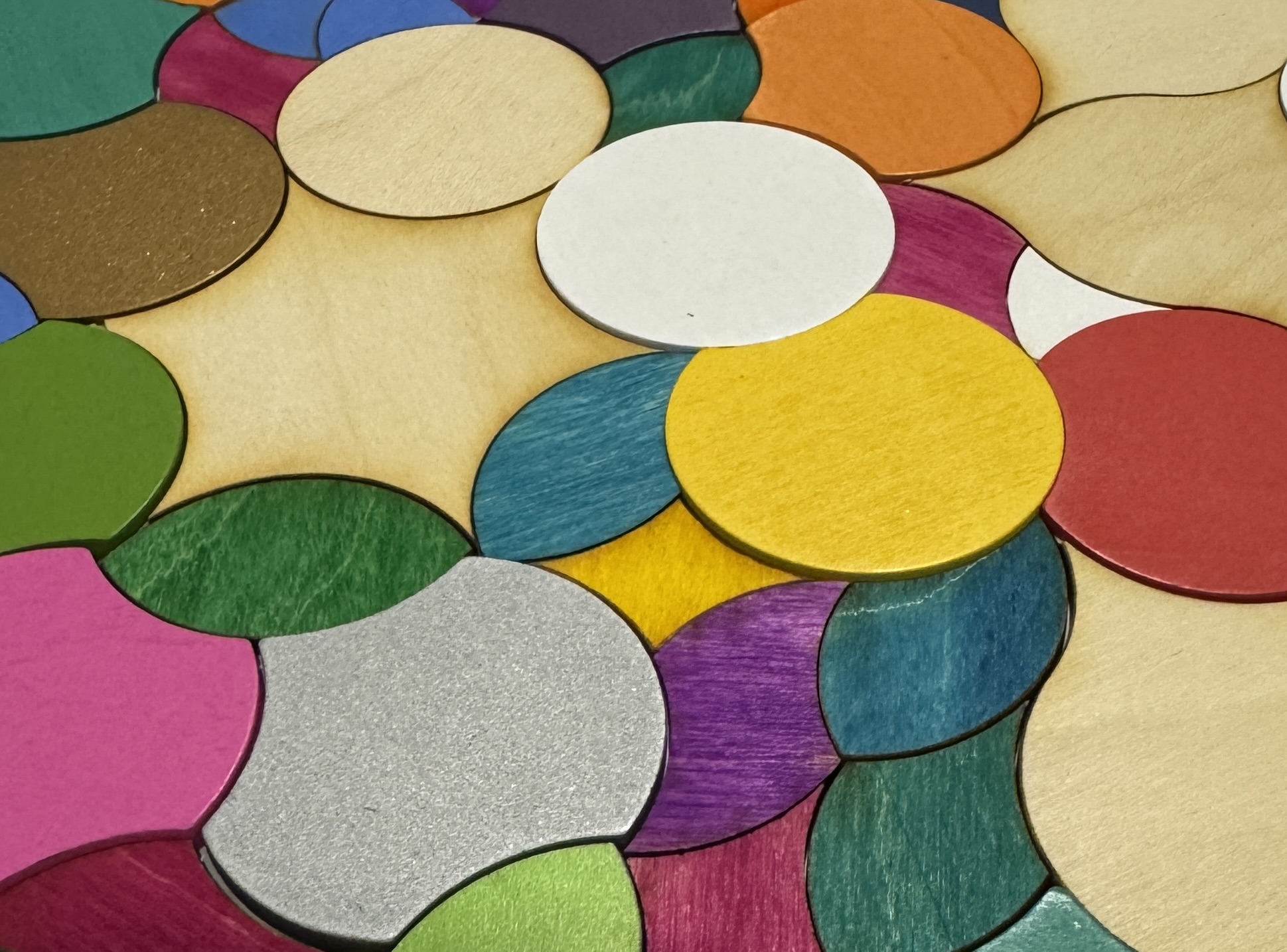
Here are some images of the Bubble 31 pieces in frames. We realized the potential of symmetry in frames even when restricted to just one of each tile thanks to Kate Jones. The first 4 frames show creative designs by folks who came by our booth in Philadelphia. The last 3 frames with all wood pieces contain exactly one of each of the 31 accessory pieces.


When we add 13 “soft tiles” made by adding one more “side” to a circle by forming a spike, and then another and another and then we mix and match all three sets we get some pretty chaos.
 \
\